
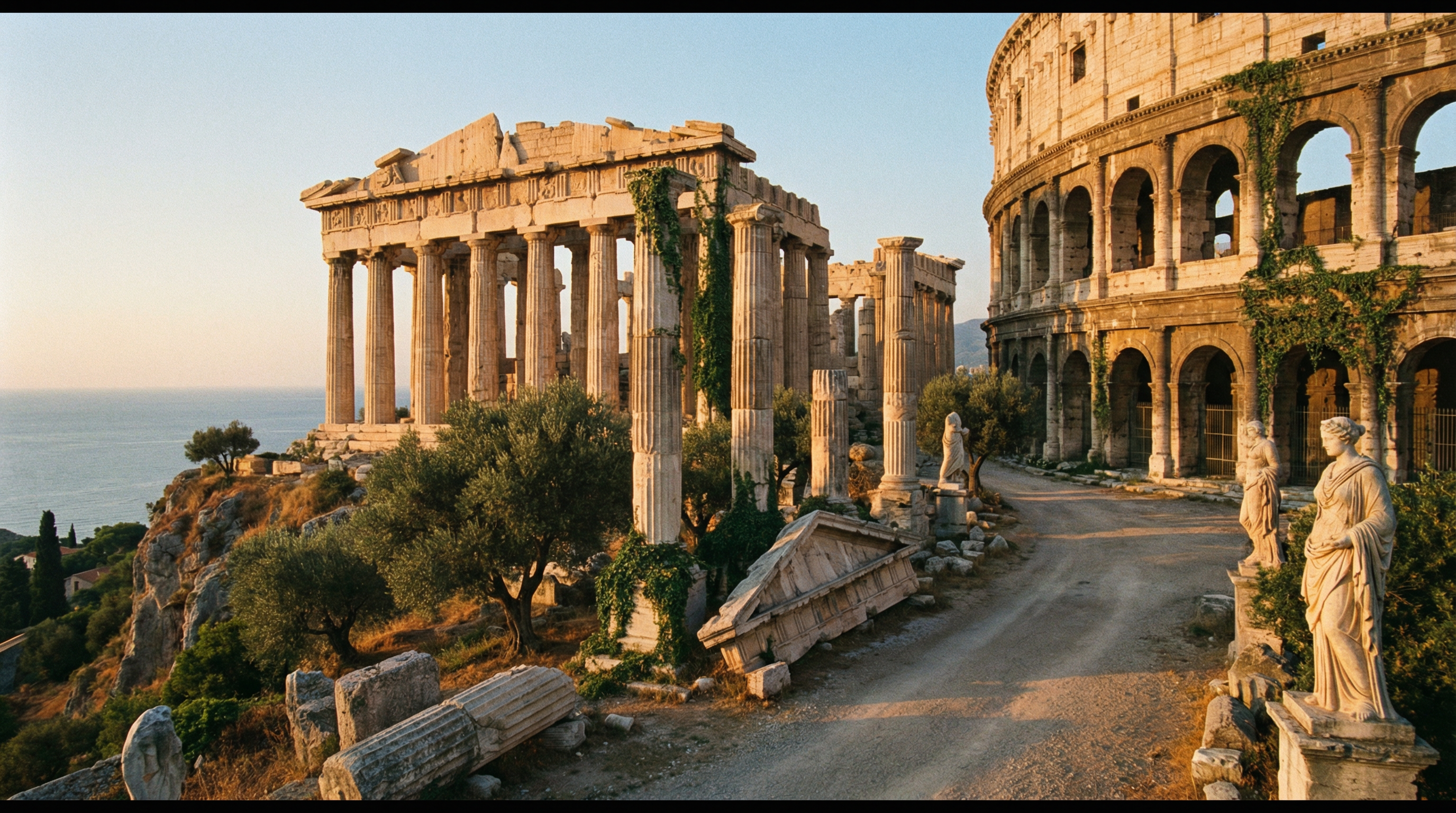
Two Cradles of the West
Greece and Italy are not just neighbours on the map. For centuries they traded, fought, and borrowed from each other—philosophy, art, law, and language. What we call “Western” thought and governance owes a huge debt to Athenian democracy and Roman order.
Ancient Greece: Ideas That Outlasted Empires
From the poleis of Athens and Sparta to the conquests of Alexander, Greek history gave the Mediterranean its first experiments in democracy, theatre, and systematic philosophy. The Parthenon and the Agora were more than buildings; they were stages for a way of life that Rome would later adopt and adapt.
Rome: From Republic to Empire
Rome absorbed Greek culture while building something new: roads, law, and an empire that stretched from Britain to the Levant. The Colosseum and the Forum still tell that story. So do modern legal systems and Romance languages, which carry Latin at their core.
Byzantium and the Italian Renaissance
After the fall of the Western Empire, the Byzantine East kept Greek and Roman learning alive. Centuries later, that heritage flowed back into Italy and fuelled the Renaissance. The link between ancient Greece, Rome, and modern Europe runs through both geography and ideas.
Understanding this shared past makes a trip to the Acropolis or the Roman Forum more than a photo stop—it turns history into a story you can walk through.
← Back to Home