
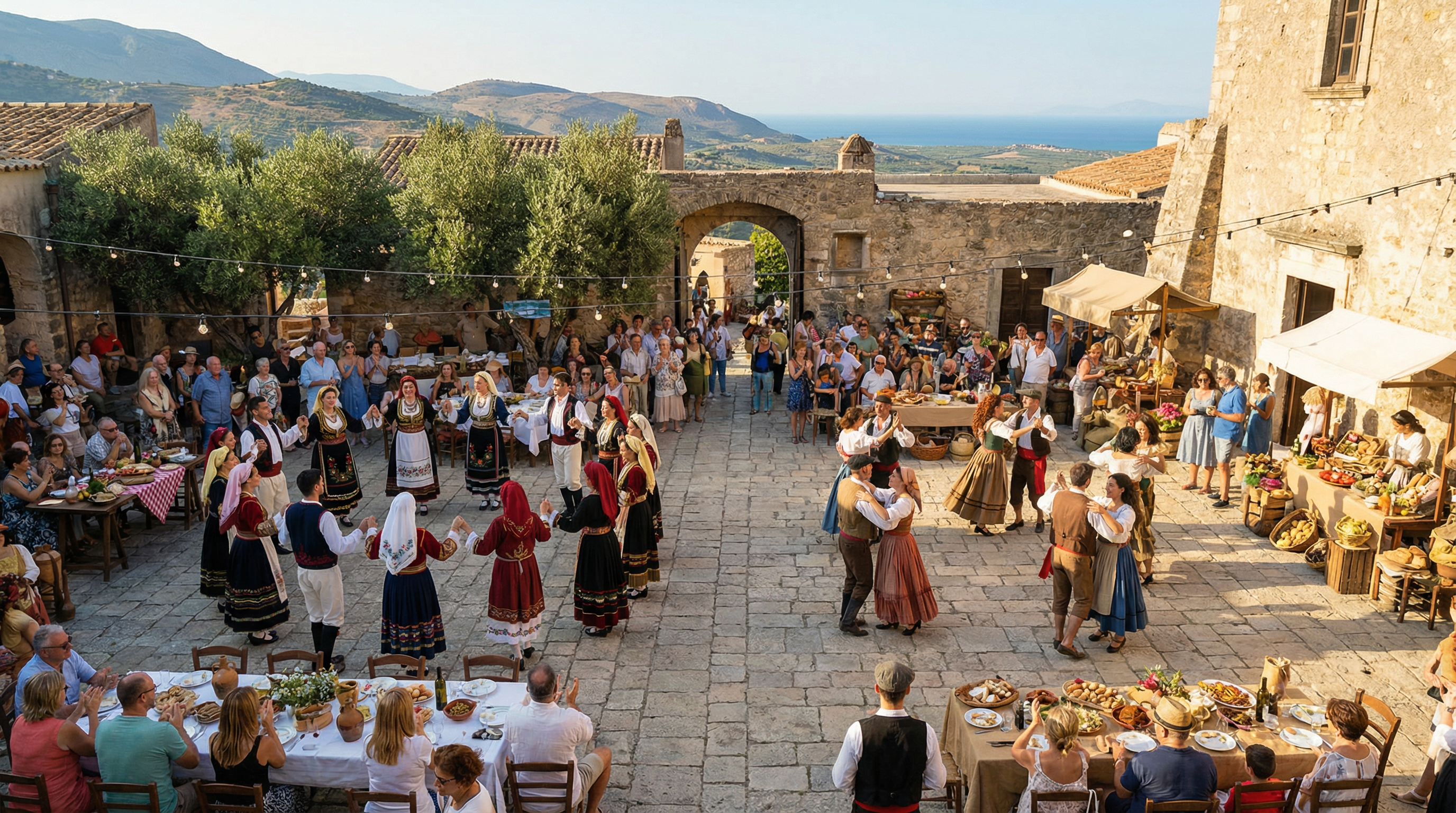
Living Heritage
Culture in Greece and Italy is not locked in museums. It’s in the way people gather at the table, celebrate saints and seasons, and turn the piazza or the plateia into a stage for everyday life. Both countries hold onto ancient forms while embracing the present.
Art and Architecture
Greek temples and Roman amphitheatres set a visual language that Europe never really left. Columns, arches, and proportion still shape how we build. In Italy, the Renaissance took that legacy and ran with it—Florence and Rome are open-air textbooks. In Greece, Byzantine churches and whitewashed villages add another layer: light, shadow, and a sense of place that feels both old and alive.
Festivals and Rituals
From Carnevale in Venice to Easter in Crete, festivals mark the year with processions, food, and music. They’re communal, often religious in origin, and still deeply local. Attending one—even as a visitor—gives you a glimpse of how identity is performed and shared.
Music and Dance
Greek rebetiko and Italian opera sit at different ends of the spectrum, but both carry emotion and storytelling. Regional dances and folk tunes remind us that “national” culture is really a patchwork of regions, each with its own accent and rhythm.
Whether you’re walking through the Uffizi or joining a panigiri on a Greek island, you’re stepping into a culture that has been passed down and reinvented for generations.
← Back to Home